
Musa México Festival: Concomitancias Exhibition – Indigenous Legacies, Presence, and Futures in Mexico and the Canary Islands
About the plan
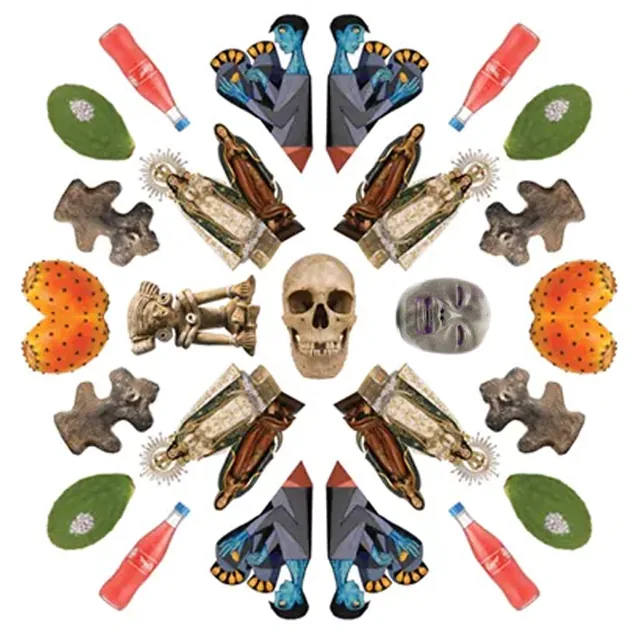
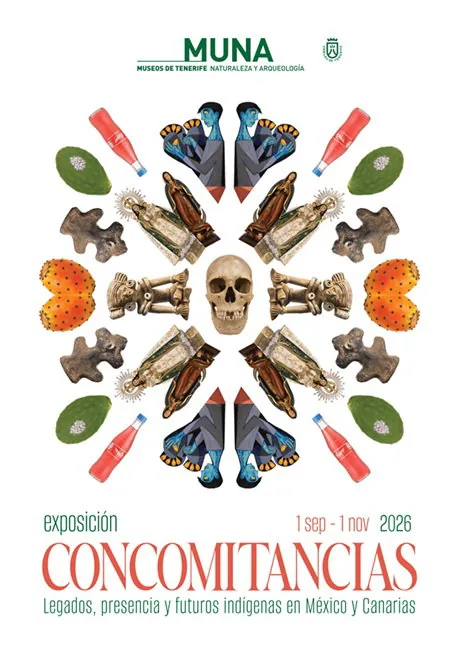
The MUNA Museum of Nature and Archaeology in Santa Cruz de Tenerife hosts the exhibition "Concomitancias: Indigenous Legacies, Presence, and Futures in Mexico and the Canary Islands", as part of the Musa México Festival. This exhibition explores the profound connections, parallels, and historical tensions between the Canary Islands and Mexico – two territories that, though separated by the Atlantic, have shared significant cultural and symbolic processes.
The exhibition starts from the premise that a "concomitancia" is a deliberate or casual coincidence of factors that produce a similar effect, analogous to convergent evolution in natural sciences. It thus reveals the links arising from similar contexts, such as the processes of colonisation, miscegenation, identity construction, and relationship with the territory experienced by both places. These convergences, while retaining the uniqueness of each trajectory, are understood to generate shared meanings.
The exhibition takes on special relevance by highlighting the indigenous legacy that still endures in the archaeology, popular faith, art, and contemporary identities of the Canary Islands and Mexico. It is based on the reflections of Fernando Estévez González (1953–2016), a leading figure in Canarian anthropology and museology, who asserted that indigeneity is a matter of the present and the future, opening avenues for cross-border reflection. The exhibition is curated by Néstor Yanes and Gloria Godínez.
The exhibition features the participation of numerous institutions, including the Archivo Histórico Provincial de Santa Cruz de Tenerife, the CAAM Centro Atlántico de Arte Moderno, the Casa de Colón, the Fundación CajaCanarias, the TEA Tenerife Espacio de las Artes, and the Universidad de La Laguna, among others. It is composed of six thematic areas that guide visitors through this comparative journey:
- 1. Origins: Explores pre-European cultures in the Canary Islands and Mesoamerica, highlighting their distinct systems of social organisation and worldviews, despite their differences and lack of contact.
- 2. European Acculturation and Syncretisms: Analyses the transformation of both contexts by European colonisation, showing processes of acculturation, indigenous resistance, and adaptation. It highlights religious syncretism with devotions to the Virgin of Guadalupe (associated with Tonantzin in Mexico) and the Virgin of Candelaria (associated with Chaxiraxi in the Canary Islands).
- 3. Atlantic Trade Routes and Revolutions: Addresses the Atlantic as a space for the circulation of people, goods, and ideas between the 16th and 19th centuries. It examines how the Enlightenment and independence processes redefined citizenship, with Mexico moving towards metropolitan rupture and the Canary Islands integrating into the Spanish framework.
- 4. Peripheral Modernities: Focuses on the 20th century and the search for national identity. It contrasts Mexican muralism, which placed the pre-Hispanic past at the centre of monumental art, with Canarian indigenism, which focused on indigenous peoples and the peasantry. Both strategies used art to reassert identities in the face of metropolitan narratives.
- 5. New Centres, New Peripheries: Analyses the international rebalancing after World War II, with Mexico strengthening its role in America and the Canary Islands...
Don't miss this enriching exhibition at the MUNA in Santa Cruz de Tenerife from 01/09 to 30/10: an unmissable cultural and educational event in the Tenerife Metropolitan Area.
More Exhibitions & Museums plans